

I’m Ramya, from Bengaluru — a city where the saree isn’t just an outfit, it’s woven into the fabric of how we celebrate, gather, and mark occasions. And yet, for most of my life, I wasn’t really a “saree person.” Draping one always felt like it demanded more time and patience than I had, so I stuck to what was easy: churidars, jeans, tops — anything simple and low-maintenance.
Somewhere in the last 6-7 years, that started to shift. I found myself reaching for a saree more often — for family functions, festivals, weddings, the occasions that called for something more. And the more I wore them, the more their grace and quiet elegance grew on me. What began as an occasional choice slowly turned into a real interest.
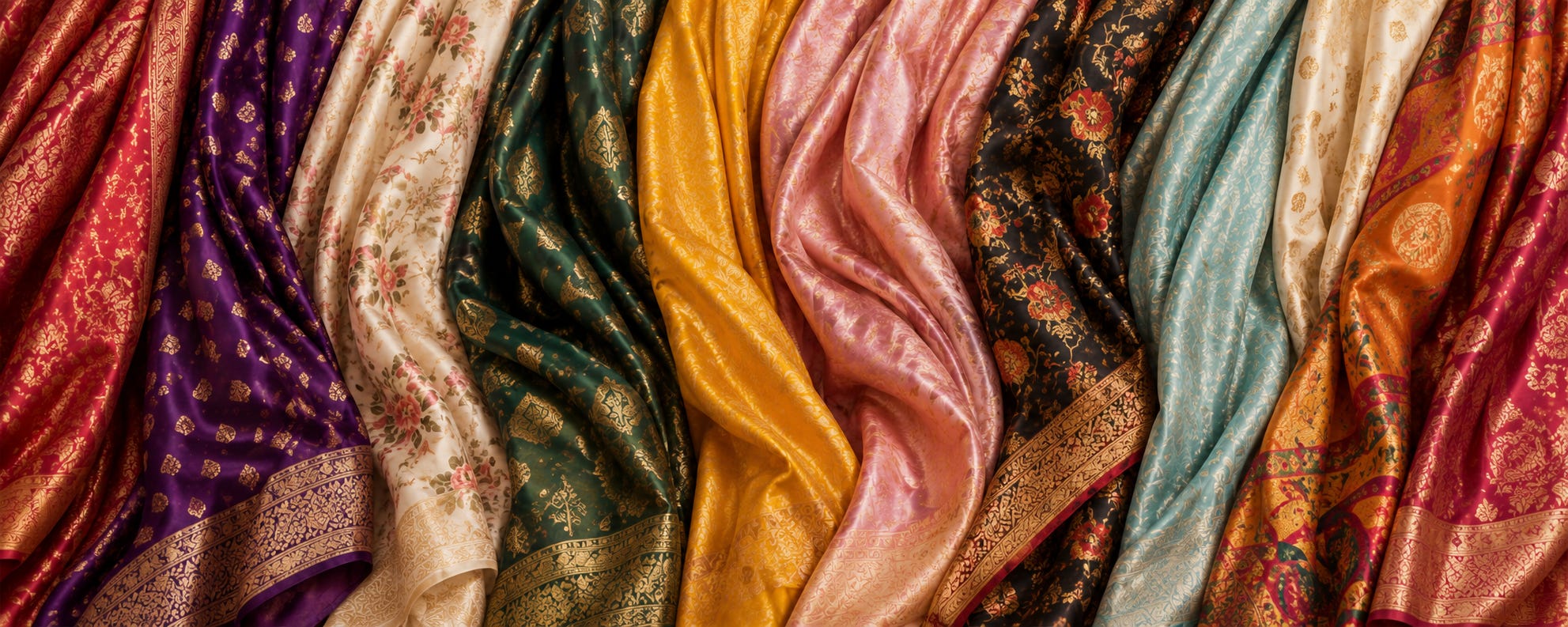
India’s handloom traditions are staggeringly diverse — nearly every state has a saree language of its own. Growing up in the South, Mysore Silk (KSIC) and Kanchipuram silk were the two I knew best. Mysore Silk sarees are prized for being light and effortlessly elegant; Kanchipuram sarees, for their richness, craftsmanship, and sheer grandeur. I loved both, but found myself wanting something in between — a silk saree with the elegance of Kanchipuram, the comfort of Mysore Silk, moderate in weight, and easy enough to drape.
That search became a doorway into a much bigger world of Indian handloom traditions — and it’s where I first ran into the idea of the Geographical Indication (GI) tag: an official recognition the Government of India grants to products whose quality, character, or reputation is tied to a specific place. If you want the fuller picture, Wikipedia has a good overview of what geographical indications are and how they work. For handloom textiles specifically, a GI tag does real work — it protects traditional weaving techniques, safeguards the livelihoods of the artisan communities who actually practice them, and gives buyers a guarantee that what they’re holding was genuinely woven where it claims to be from.
A great example of this in action is Patan Patola from Gujarat. The Economic Times reported that the GI tag awarded to Patan’s Patola weavers was meant to protect their centuries-old double-ikat weaving technique and give them legal recourse against cheap imitations sold under the Patola name. You can read more here.
Through this blog series, I want to trace that journey — the authentic handwoven sarees I’m discovering, the stories behind each weave, why each one earned its GI tag, and the rich heritage that makes every single saree unique.